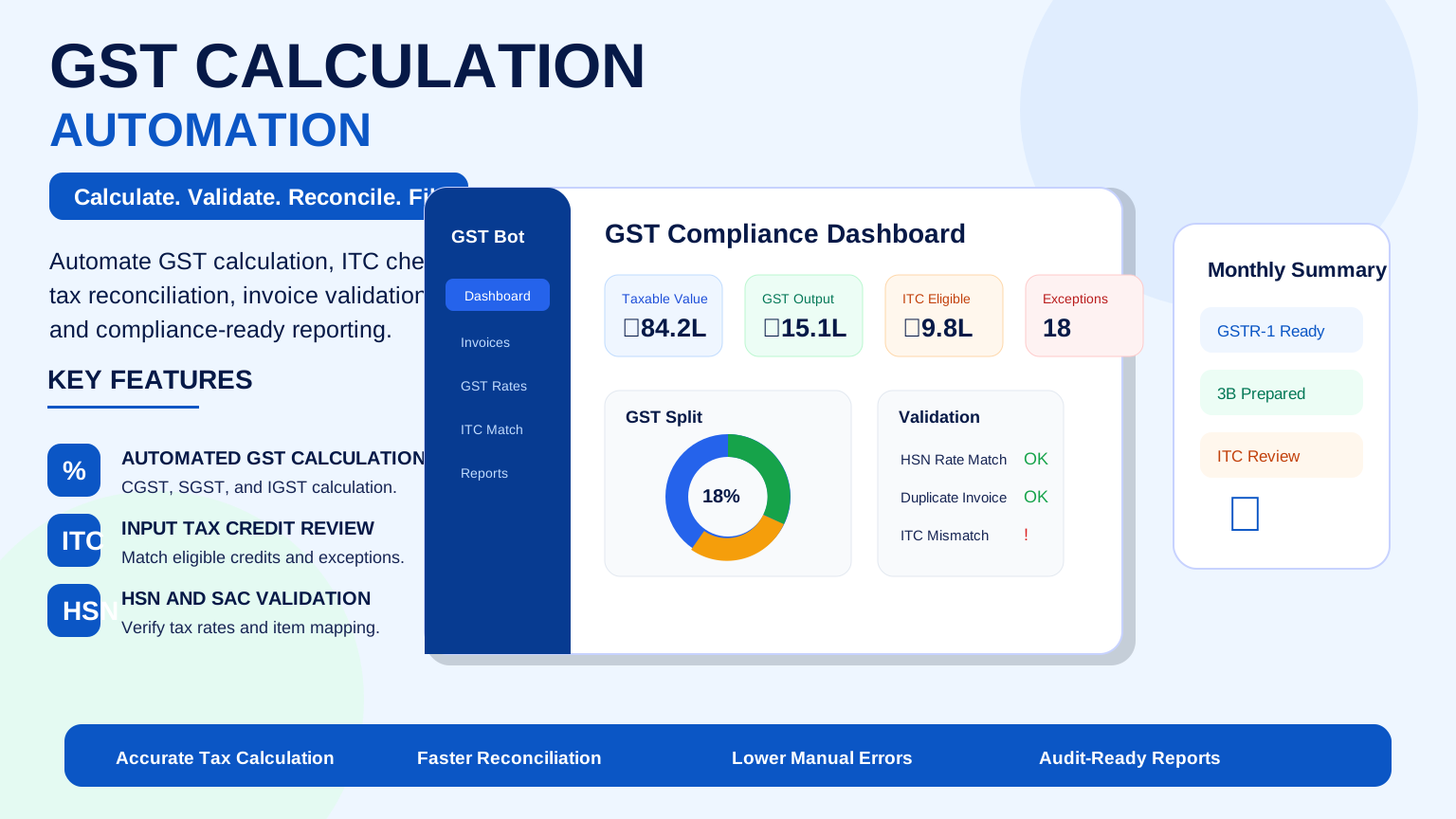
GST work becomes difficult when teams calculate taxes manually, apply different rates, reconcile purchase registers, and check ITC eligibility near filing deadlines. GST calculation automation helps finance teams standardize this process.
What The System Automates
The workflow can calculate CGST, SGST, and IGST based on state, place of supply, transaction type, taxable value, and configured rules. It can also validate HSN and SAC mapping, tax-inclusive pricing, rounding rules, and invoice totals.
ITC And Reconciliation
For purchase invoices, the system can compare books with imported GSTR-2B data and highlight matched, unmatched, missing, duplicate, and disputed invoices. This gives accounts teams a cleaner view before ITC claim decisions.
Useful GST Checks
- GSTIN format and state-code validation
- HSN and SAC rate validation
- Duplicate purchase invoice detection
- GSTR-2B matching and mismatch reports
- Net GST liability summaries
Compliance Benefits
A monthly dashboard can show GSTR-1 and GSTR-3B readiness, pending validations, unresolved exceptions, ITC review status, and records requiring correction. Audit trails also make changes traceable.
Explore the GST Calculation Automation
Standardize GST calculation, HSN/SAC validation, GSTR-2B reconciliation, ITC eligibility review, and tax reporting.
GST Calculation Automation FAQs: Features, Workflows & Best Practices
Comprehensive answers to frequently asked technical, operational, and implementation questions about gst calculation automation in India.
What is GST Calculation Automation and how does it prevent costly tax compliance penalties?
GST Calculation Automation is a tax workflow solution that automates multi-rate GST computation, validates HSN/SAC classifications, matches supplier invoices against government GSTR-2B portal data, checks Input Tax Credit (ITC) eligibility, and prepares error-free return-ready filings.
How does the system automatically verify whether to apply CGST + SGST or IGST on transactions?
The system automatically inspects supplier GSTIN, recipient GSTIN, and the legal Place of Supply (POS). It dynamically applies Intra-State (CGST + SGST/UTGST) or Inter-State (IGST) tax rules, eliminating costly tax jurisdiction misclassification errors.
Can the automation validate HSN and SAC codes against official GST tariff rate tables?
Yes. The system validates 4, 6, or 8-digit HSN and SAC codes against statutory CBIC GST rate master databases, instantly catching incorrect tax percentage applications (e.g., applying 12% instead of 18%) prior to invoice generation or accounting entry.
How does the automated solution perform 2B reconciliation with internal purchase registers?
The system ingests the official monthly GSTR-2B JSON/Excel downloads from the GST Portal and automatically compares invoice numbers, supplier GSTINs, invoice dates, taxable values, and tax amounts against your internal purchase register using fuzzy matching rules.
How does the software flag mismatched vendor invoices, duplicate claims, and ineligible ITC under Rule 37A/38?
The reconciliation engine groups discrepancies into clear categories: Matched, Value Mismatch, Missing in GSTR-2B, Missing in Books, and Ineligible ITC (e.g., blocked credits under Section 17(5)). This allows finance teams to claim only 100% eligible ITC.
Can the automation handle multi-item invoices containing varying GST rates and compensation cess?
Yes. The engine processes complex invoices with multiple line items carrying different tax slabs (0%, 5%, 12%, 18%, 28%) as well as compensation cess, accurately computing item-wise and invoice-level totals.
Can GST calculation automation integrate directly with ERP systems like SAP, Tally, and Oracle?
Yes. The solution connects seamlessly via direct database connectors, APIs, or automated Excel/CSV bridges with SAP ECC, SAP S/4HANA, Tally Prime, Oracle ERP, Microsoft Dynamics, and custom accounting packages.
How does automating GST calculation help companies avoid interest charges, late fees, and tax notices?
By identifying supplier non-compliance, invoice number typos, and ITC mismatches weeks before the GSTR-3B filing deadline, the system enables finance teams to resolve discrepancies proactively and avoid statutory interest penalties.
What audit-ready GST summary reports, mismatch sheets, and vendor follow-up notices does the system produce?
The system generates one-click monthly reconciliation dashboards, vendor-wise discrepancy statements ready to be emailed to defaulting suppliers, and statutory summary sheets matching GSTR-1, GSTR-3B, and GSTR-2B formats.
How rapidly can an organization implement GST calculation and reconciliation automation?
Depending on invoice volumes and ERP complexity, standard implementations are completed within 5 to 10 working days, providing immediate clarity on input tax credit reconciliation for the upcoming tax cycle.
Have more questions about implementing GST Calculation Automation for your organization?
Explore Official GST Calculation Automation Page -> Speak With Our Solution Experts